|
-
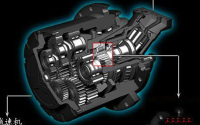
Brakes are mainly used in lifting transportation machinery, petroleum machinery and other occasions. The specific structure is simple, the use is also convenient, easy to repair, etc., and some friends are not careful about this product, and its working principle is not particularly clean, in order to help Everyone knows more about the brakes. Let's take the block brake as an example. When the excitation coil is energized, it will attract the armature. Then, by the action of the push rod, the tension of the two brake arm restraining springs is laterally moved to the outside, so that the tiles connected by the two brakes are released, and the machine can be freely operated. If braking is required, only the brake is needed. The two brake arms are cut inwardly, and the brake is used. The service brake manufacturer reminds you that after using the block brake for a period of time, it is necessary to check regularly, the main inspection
-
As the standard stipulates: the hoisting mechanism and the luffing mechanism must be provided with normally closed brakes, and the walking or slewing mechanism can be equipped with normally closed brakes. Consider the use of the site, such as the brakes have enough space to install, block, band brake or arm disc brakes; when the space is limited, you can use the internal shoe or clamp disc brake. Considering the use environment of the supporting main machine, electromagnetic or pneumatic brakes should be used for the occasions where the leakage oil has strict requirements. For the metallurgical places with high ambient temperature, electric hydraulic brakes or metallurgical electromagnetic brakes with higher insulation grade can be used. When the ambient temperature is low or high, and the electric hydraulic brake is used in the open space, pay attention to replace the corresponding grade of hydraulic oil. In environments with severe iron filings and dust, avoid using
-
The downstream industries of the industrial brake industry are mainly equipment manufacturing industries such as lifting and transportation machinery, metallurgical equipment, mining equipment, construction machinery, wind power and nuclear power equipment, ships and offshore heavy industry. Benefiting from the revitalization and development of these industries, the industrial brake industry will We are welcoming another round of sustained and healthy development opportunities. China's industrial brake industry will maintain an annual growth rate of 10%-20% in the next few years.
-
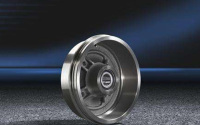
The development of modern automotive brakes originated from the original mechanical control device. The most primitive brake control was only the driver's manipulation of a simple set of mechanical devices to apply force to the brakes. At that time, the car was relatively small in weight, low in speed, and mechanically braked. It has been able to meet the needs of automotive braking, but as the weight of the car itself increases, the power-assisting device becomes more and more important for mechanical brakes. Thus, a vacuum booster has begun to appear. In 1932, the Cadillac V16 four-wheel with a weight of 2,860 kg was used with a drum brake with a diameter of 419.1 mm and a vacuum booster controlled by a brake pedal. Lincoln also introduced the V12 sedan in 1932, which uses a drum brake that controls the vacuum booster with four cords. With the development of science and technology and the development of the automotive industry,
|
|